
What Causes an Outdoor Circuit Breaker to Fail in Harsh Environments—and How Do You Prevent It?

 Site Editor
An outdoor circuit breaker is built to sit in the weather. But “outdoor-rated” and “harsh-environment-ready” are not the same thing. A unit that performs fine on a temperate distribution line can develop tracking, corrosion, or a refused operation within a few seasons once it is installed near salt spray, industrial exhaust, or a site where temperature swings push the enclosure through a dew point every single night. The difference rarely comes down to one dramatic defect. It is the accumulation of small environmental stresses acting on insulation surfaces, seals, and mechanical linkages over thousands of cycles.
Understanding where those stresses concentrate—and which design choices address them—is what separates a specification that holds up from one that generates repeat crew visits.
Condensation: The Failure Mode That Hides Inside the Enclosure
Moisture inside an outdoor circuit breaker enclosure does not need a failed gasket to appear. It forms whenever humid air meets an internal surface at or below the dew point, which is a routine event in climates with cool nights and warm, moist days. Once that moisture settles on live parts or mechanism components, two things happen. Insulation resistance drops, and bare metal begins to corrode from the inside out—damage that stays invisible until the unit refuses to operate or a flashover occurs during a routine switching event.
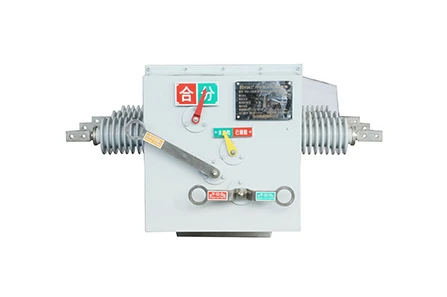
The prevention strategy starts with reducing the amount of humid air that can reach the interior in the first place. Fully sealed stainless steel enclosures that house both the live parts and the operating mechanism prevent moisture, salt fog, and dust from entering, eliminating internal condensation as a failure pathway. Where a fully sealed architecture is not practical, heaters or controlled ventilation keep internal surfaces above the dew point and reduce condensation caused by temperature and humidity shifts. The key point for buyers is that condensation control is a design decision, not a maintenance fix. A unit that relies on field-installed heaters to stay dry is telling you something about how it handles humidity.
Pollution and Surface Tracking: What Happens on the Outside of the Bushing
External insulation fails differently from internal insulation. Dust, salt, and industrial particulate settle on bushing surfaces, and when humidity rises, that contamination layer can become conductive. On a hydrophilic surface, moisture spreads into a continuous film, leakage current climbs, and the stage is set for flashover. This is why pollution flashover is not a cosmetic issue. It is a surface-chemistry problem.
Silicone rubber composite insulators change the surface behavior. Their hydrophobic chemistry causes water to bead and roll off rather than wet out, which interrupts the formation of a conductive film and keeps leakage current low even when contamination is present. Field and laboratory comparisons put the pollution flashover voltage of silicone composite bushings roughly 30% to 50% higher than equivalent porcelain designs, which is why they are increasingly specified for coastal salt-fog zones, heavy industrial districts, and high-humidity regions. For an outdoor circuit breaker headed to a Class III or Class IV pollution site, the bushing material is not a secondary detail. It determines whether the unit needs periodic cleaning and coating just to stay in service.
Corrosion and Mechanical Degradation: Where the Weather Reaches the Mechanism
Even when the primary insulation is sound, the operating mechanism can degrade from environmental exposure. Hinges, linkages, and spring-charging components that are not sealed from the atmosphere accumulate oxidation and hardened lubricant over time. CIGRE reliability surveys have consistently found that mechanical causes account for roughly 75% of major circuit breaker failures—failures to operate, rather than dielectric breakdowns. In an outdoor setting, that mechanical risk is amplified by corrosion, moisture, and the thermal cycling that works seals and clearances loose.
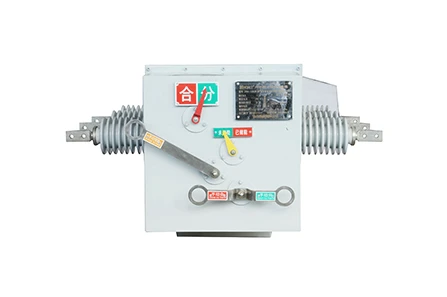
Stainless steel enclosures and sealed mechanism boxes address the external side of this problem by keeping salt fog, acid rain, and dust away from moving parts. Solid-dielectric pole designs go a step further by encapsulating the vacuum interrupter and primary connections, removing internal voids and preventing moisture absorption that degrades insulation from within. What this means in practice is that the environmental protection is not layered on top of the breaker—it is structural. The parts most vulnerable to weather are the parts that have been removed from contact with the weather altogether.
Designing for the Site, Not the Catalogue
The most effective prevention is not a field retrofit. It is a specification that matches the unit to the actual exposure. A coastal renewable site, a high-altitude wind farm, and an industrial substation in a temperate climate place different demands on an outdoor circuit breaker, and the same standard catalogue unit will not serve all three equally well. Temperature range, pollution class, altitude, and humidity exposure belong in the procurement conversation alongside voltage and breaking capacity.
This is also where type-test documentation matters. IEC 62271-100 includes environmental testing provisions for humidity, condensation, and severe ice conditions on outdoor circuit breakers, and a supplier should be able to show that the tested configuration matches what is being delivered. A certificate that covers a different bushing material, a different enclosure rating, or a different mechanism arrangement does not tell you how the unit on your pole will behave in its fifth rainy season.
Prevention Is Cheaper Than Recovery
No outdoor circuit breaker is immune to weather. The practical goal is to choose a design where the environmental defense is built into the insulation system and the enclosure, rather than dependent on site conditions staying within a narrow band. Sealed construction, hydrophobic external insulation, corrosion-resistant enclosures, and solid-dielectric encapsulation each address a specific failure pathway that field data keeps pointing back to. Put them together, and the result is a breaker that spends its service life switching, not waiting for a maintenance crew.
If you are specifying an outdoor circuit breaker for a coastal, industrial, high-altitude, or high-humidity site, the conversation should start with the environment—not the price list. Honle’s team can help you match enclosure rating, bushing material, pollution class, and mechanism protection to the conditions the unit will actually face, and supply the type-test documentation to back it up.
[Contact Us for Outdoor Circuit Breaker Selection & Environmental Specification Support]