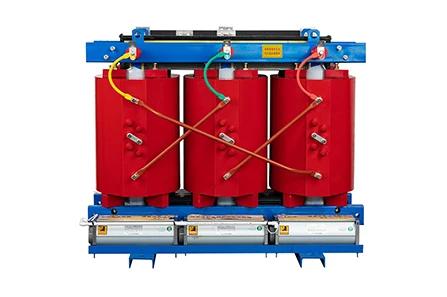

Dry Transformer for Indoor Projects: Selection Rules That Reduce Fire-Safety Cost

 Site Editor
An indoor transformer specification rarely fails because the equipment itself is bad. It fails because the cost structure around that equipment was never fully priced in. A lower first cost per kVA can disappear quickly once vault construction, fire separation, oil containment, and ventilation upgrades enter the electrical room budget. For anyone sourcing a Dry Transformer for a building project, the practical question is not which unit is cheaper on a quotation sheet—it is which selection rules keep the installed cost predictable from the first drawing to final inspection.
What follows is a selection framework built around that question. The rules are not about a specific brand or a single kVA rating. They are the decision points that most directly move fire-safety and installation cost in indoor dry transformer projects.
Where the Real Cost Sits in an Indoor Dry Transformer Project
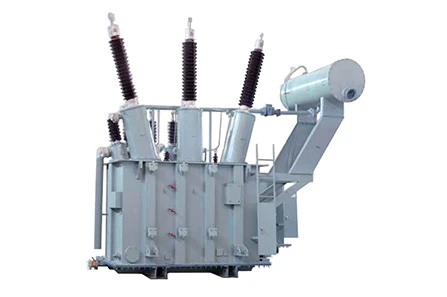
The first rule is to separate equipment cost from installed cost. A dry transformer typically carries a higher per-kVA equipment premium than an oil-filled unit at the same rating. But for indoor placement under roughly 5 MVA, that premium is frequently offset by what the project no longer has to build.
Indoor dry transformers eliminate oil containment pits, spill protection, and fire-rated vaults in most code-compliant designs. Room construction savings compared with oil-filled alternatives commonly fall in the 30–50% range, and NEC-compliant dry-type installations have been measured at 12–18% lower total installed cost once vault construction is factored in. For a mid-size commercial project, avoiding that infrastructure alone can save tens of thousands in construction cost.
The selection implication is straightforward: an indoor dry transformer should be evaluated on installed cost, not equipment price alone. A quote that looks 20% higher at the equipment line may already be the lower-cost option once the civil and fire-protection scope is attached to the alternative.
Rule One: Match Insulation Class to the Room, Not Just the Load
Insulation class and temperature rise are the first technical filters in indoor dry transformer selection, because they determine how much fire separation the room needs and how much thermal margin the unit carries under real load.
Most indoor dry transformers use Class F (155°C) or Class H (180°C) insulation systems. In many jurisdictions, a dry-type unit with Class 155 insulation or higher is not required to be installed inside a fire-rated vault when proper space separation is maintained—a code detail that directly removes vault construction from the budget. The temperature rise class should be specified alongside the insulation class, not chosen independently. A 115°C rise on a 220°C insulation system, for example, leaves continuous overload headroom that a higher temperature rise design does not.
The practical rule: let the room conditions and the load profile set the insulation and temperature rise, rather than defaulting to the cheapest thermal class available.
Rule Two: Size Ventilation Before the Enclosure
A Dry Transformer produces heat that must leave the room; air is the cooling medium, and the electrical room is the heat sink. A 1,000 kVA dry-type unit can reject roughly 11,500 W at full load—comparable to a small residential HVAC system running continuously.
This is where enclosure decisions become cost decisions. An IP20 enclosure is generally adequate for indoor placement, while IP23 or higher is reserved for outdoor or rain-prone locations. But the enclosure cannot compensate for an undersized ventilation strategy. Transformer rooms typically need 10 to 15 air changes per hour, or forced ventilation sized to hold ambient temperature at or below 40°C. IEC 60076-11 also ties room airflow to loss output—minimum ventilation is often expressed per kW of transformer loss.
The selection rule is to confirm the ventilation calculation before the enclosure rating is locked. A higher IP rating chosen to compensate for a hot room adds cost without solving the thermal problem.
Rule Three: Treat Noise as a Fire-Safety-Adjacent Specification
Noise does not appear in fire codes, but it does appear in occupancy approvals and change orders. A standard indoor dry transformer commonly produces 55–65 dB at one metre; low-noise designs can bring that down to 45–50 dB for hospitals, hotels, and residential-adjacent electrical rooms.
The cost relevance is indirect but real: a unit that triggers a noise complaint or an acoustical review after installation can force soundproofing, relocation, or enclosure retrofits that were never in the budget. For occupied buildings, specifying noise at rated condition—rather than accepting a generic “low noise” claim—keeps that risk off the table.
Rule Four: Check Harmonic Load Before the kVA Rating Is Finalised
Indoor projects increasingly carry non-linear loads: LED lighting, variable frequency drives, UPS systems, and IT equipment. When more than roughly 20% of the load is non-linear, a standard dry transformer can experience harmonic overheating that shortens insulation life and increases loss.
The selection rule is to review the load profile before the kVA rating is fixed. A K-rated or harmonic-tolerant Dry Transformer may carry a modest equipment premium, but it avoids the far larger cost of premature replacement or derating in an electrical room that cannot easily accommodate a second unit. This is also the point where the dry transformer versus oil transformer comparison becomes secondary—the more urgent question is whether the dry unit is rated for the load it will actually see.
Compliance Is a Cost Variable, Not a Checkbox
Every indoor dry transformer project eventually meets NEC Article 450 or IEC 60076-11, and in healthcare or high-occupancy settings, NFPA 99 and NFPA 101 may also apply. What matters for cost control is not merely having a certificate, but matching the certification scope to the installation method the project actually uses.
A unit with Class 155 insulation and the right clearance documentation may avoid vault requirements that a differently rated unit cannot. Clearance itself follows code: front access for medium-voltage dry transformers is commonly 1,200 mm, with 600 mm at the rear and sides, and top clearance around 1,000 mm—values that must be planned into room dimensions before construction, not discovered at inspection. Getting these rules into the specification early is what keeps fire-safety cost from becoming a late-stage change order.
What This Means for Your Next Indoor Project
Indoor dry transformer selection is ultimately a sequencing discipline. Insulation class, ventilation, noise, harmonic rating, and code compliance are not independent line items—each one changes the cost of the room around the equipment. When they are specified in the right order, the Dry Transformer becomes a predictable installed-cost decision rather than a procurement surprise.
If you are comparing indoor dry transformer options for a commercial, healthcare, data centre, or mixed-use project, the most useful next step is a specification review against the room conditions and load profile you already have. Share your kVA range, ambient conditions, and applicable code framework with our engineering team, and we can help you map the selection rules to your project before the electrical room layout is fixed.