
Price vs Performance: Economy Relay vs Premium Servo AVR

 Site Editor
When selecting an automatic voltage regulator (AVR) for industrial or commercial use, one of the most common questions buyers face is whether to choose a relay-type or a servo motor voltage regulator. Relay-type regulators offer a lower upfront cost and are suitable for applications with moderate voltage fluctuations, while servo motor regulators provide higher precision, better reliability, and longer service life for demanding environments. The right choice depends on your specific voltage conditions, load characteristics, and long-term operating cost considerations.
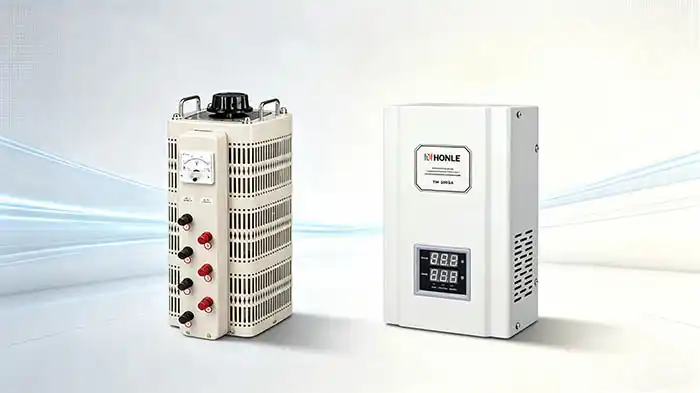
This article compares the two technologies side by side—how they work, where each performs best, and what factors actually affect total cost of ownership—to help you make an informed purchasing decision.
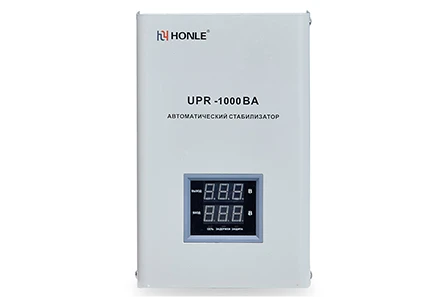
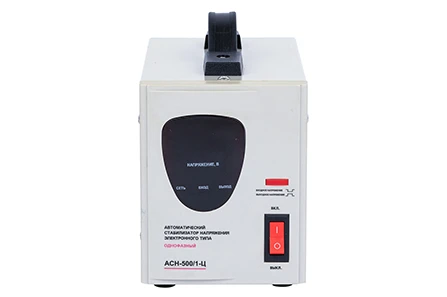
What Is a Relay-Type Voltage Regulator?
A relay-type voltage regulator uses electromagnetic relays to switch between different taps on an autotransformer. When the input voltage deviates from the set value, the control circuit energizes the appropriate relay to select a different transformer tap, thereby adjusting the output voltage to the desired level.
Key characteristics:
- Step adjustment
- Fast response time
- Simpler circuit design
- Lower manufacturing cost
- Suitable for voltage fluctuations within ±10–15%
Relay-type regulators are widely used in household appliances, small commercial equipment, and applications where voltage variations are relatively stable and precision requirements are moderate.
What Is a Servo Motor Voltage Regulator?
A servo motor voltage regulator, also known as a servo-type stabilizer, uses a servo motor to drive a carbon brush that moves along the windings of an autotransformer. The control circuit continuously monitors the output voltage and adjusts the brush position to maintain a steady output.
Key characteristics:
- Continuous, stepless adjustment
- High regulation accuracy
- No switching transients or surges
- Longer operational life due to minimal wear on contacts
- Higher initial cost but lower maintenance over time
Servo motor regulators are the preferred choice for industrial equipment, medical devices, data centers, precision manufacturing, and other applications where voltage stability is critical. For a full range of available configurations of automatic voltage regulators, review the product line that best matches your requirements.
Head-to-Head Comparison: Relay vs Servo AVR
| Feature | Relay-Type Voltage Regulator | Servo Motor Voltage Regulator |
|---|---|---|
| Regulation method | Step | Continuous |
| Output voltage accuracy | ±3–5% | ±1% or better |
| Response time | Fast | Moderate |
| Output waveform | May have step transients | Smooth, no transients |
| Moving parts | Relays | Servo motor + carbon brush |
| Maintenance frequency | Higher | Lower |
| Noise level | Clicking sounds during switching | Quiet continuous operation |
| Suitable load types | Resistive, moderate inductive | All types, including sensitive equipment |
| Typical cost | Lower initial investment | Higher initial investment |
| Service life | Shorter | Longer |
When to Choose a Relay-Type Voltage Regulator
Relay-type regulators are a practical choice when:
- Voltage fluctuations are moderate – If your mains voltage stays within ±10–15% of nominal and does not fluctuate rapidly, a relay-type unit can handle the job effectively.
- Budget is a primary constraint – For projects with tight initial capital expenditure limits, relay-type regulators offer a lower entry cost.
- Load is non-critical – For lighting, heating, small motors, and general-purpose equipment where a brief voltage dip or spike is not catastrophic.
- Application is residential or light commercial – Relay-type regulators are commonly found in home appliances, small shops, and office equipment.
Typical applications: Household voltage stabilizers, small commercial refrigeration, lighting systems, basic workshop equipment.
When to Choose a Servo Motor Voltage Regulator
Servo motor regulators are the better investment when:
- Voltage fluctuations are severe or frequent – In areas with unstable grids or heavy industrial loads nearby, servo regulators provide the stable output needed to protect sensitive equipment.
- Load includes precision electronics – Medical devices, CNC machines, laboratory instruments, data servers, and communication equipment require the tight voltage tolerance that only servo regulation can provide.
- Long-term reliability matters – With fewer contact wear issues, servo regulators typically require less frequent maintenance and have a longer operational life.
- Downtime costs are high – If equipment failure due to voltage instability would cause significant production loss or safety risks, the premium for servo technology is easily justified.
- Three-phase applications – For industrial three-phase systems, servo motor regulators are the standard choice due to their ability to handle unbalanced loads and provide balanced output. Explore the three-phase voltage regulator models available for industrial applications.
Typical applications: Industrial manufacturing, medical facilities, data centers, telecommunications, precision machining, laboratory and testing equipment, commercial critical infrastructure.
Cost Factors: Beyond the Purchase Price
The price tag is only one part of the total cost equation. When comparing relay-type and servo motor regulators, consider these additional cost factors:
| Cost Factor | Relay-Type | Servo Motor |
|---|---|---|
| Initial purchase | Lower | Higher |
| Installation | Similar | Similar |
| Energy efficiency | Good | Excellent |
| Maintenance parts | Relays | Carbon brushes |
| Labor for maintenance | Higher | Lower |
| Downtime risk | Higher | Lower |
| Replacement frequency | More frequent | Less frequent |
Over a 5–10 year operating period, the total cost of ownership for a servo motor regulator often becomes comparable to or lower than that of a relay-type unit, despite the higher initial investment.
Common Misconceptions
"Relay-type regulators are outdated." Not necessarily. They remain a cost-effective solution for applications with stable voltage conditions and non-critical loads. The technology has improved with solid-state control circuits that enhance reliability.
"Servo regulators are always better." Not for every application. If your voltage is already stable and your equipment is not sensitive, paying for servo precision may not deliver a return on investment.
"Faster response is always better." Relay-type regulators respond faster than servo types, but the response is stepped rather than smooth. For most industrial loads, smooth regulation is more important than speed.
Decision Checklist for Buyers
Before making a selection, work through this checklist:
- What is the typical voltage fluctuation range at your site? (Measure over a full operating cycle)
- How sensitive is your equipment to voltage variation? (Check manufacturer specifications)
- What is the cost of equipment damage or downtime due to voltage issues?
- What is your maintenance capacity and budget?
- What is the expected operating life of the installation?
- Are there three-phase or unbalanced load considerations?
- Do you need remote monitoring or communication capabilities?
- What are the space and mounting constraints?
Frequently Asked Questions
Q: Which type of voltage regulator is more reliable?
Servo motor regulators generally offer higher long-term reliability because they have fewer contact wear issues. Relay contacts can degrade over time due to arcing and mechanical fatigue, whereas servo regulators operate with continuous, gentle brush movement.
Q: Can a relay-type regulator handle three-phase loads?
Yes, relay-type three-phase regulators are available. However, for three-phase applications with significant load imbalance or precision requirements, servo motor regulators are typically recommended.
Q: How do I know if my voltage fluctuations are within relay-type tolerance?
Measure your input voltage over a period of at least one week during normal operation. If the variation stays within ±10–15% of nominal and does not change rapidly, a relay-type unit may be suitable. For variations beyond this range or rapid fluctuations, a servo regulator is advisable.
Q: Do servo motor regulators require more maintenance?
No, they typically require less maintenance. The primary wear part is the carbon brush, which needs occasional inspection and replacement. Relay-type units require periodic inspection and replacement of relay contacts, which can be more labor-intensive.
Q: Which type is more energy efficient?
Both types are generally efficient, but servo motor regulators can achieve slightly higher efficiency because they maintain optimal tap positions continuously. The difference is usually marginal in most operating conditions.
Q: Can I upgrade from relay-type to servo motor later?
Yes, but it is more cost-effective to choose the right type from the start. Upgrading later involves purchasing new equipment and additional installation work.
Conclusion
The choice between a relay-type and a servo motor voltage regulator ultimately comes down to your specific application requirements, voltage conditions, and long-term cost considerations.
- Choose relay-type if you have moderate voltage fluctuations, a tight initial budget, and non-critical loads.
- Choose servo motor if you need high precision, long-term reliability, and are protecting sensitive or costly equipment.
Neither technology is universally "better"—each serves a distinct set of applications. The key is to match the technology to your actual needs rather than over-specifying or under-specifying.
For a full range of voltage regulation solutions—including single-phase and three-phase automatic voltage regulators—review the available configurations at Honle Automatic Voltage Regulator. For specific technical questions or to discuss your application requirements, contact the Honle team for engineering support.