
Why Transformer Component Bottlenecks (Not Factory Capacity) Are the Real Lead-Time Driver in 2026

 Site Editor
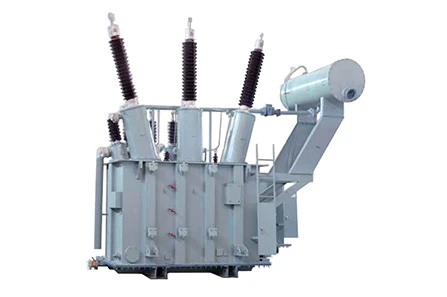
Here is a number that confuses almost every buyer entering the market this year: global power transformer production capacity is running at roughly 60% utilisation, yet large units are still being quoted 30 months out—and in some regions, delivery slots stretch toward 2031. The factories are not full. The lines are not buried. What is buried is the supply of a handful of components that bolt onto the finished unit. Until procurement teams start scheduling around those components instead of the tank, the power transformer lead time conversation will keep going in circles.
The Capacity Paradox, Explained
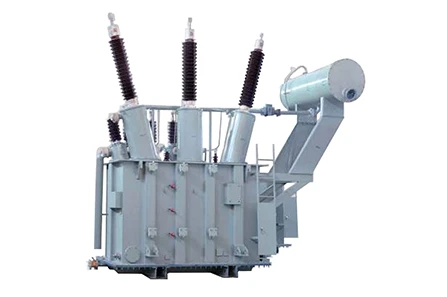
The instinct is to blame the factory. More demand, longer queues, expansion needed. But CWIEME Berlin 2026 data tells a different story: installed capacity is not the binding constraint. A manufacturer can have welding bays, winding stations, and test floors standing ready, and still watch a finished unit sit incomplete because a 345 kV bushing has not arrived and an on-load tap changer is eighteen months from delivery. Bushings and tap changers were singled out in that session as the two components doing the most damage to transformer delivery schedules. The bottleneck lives upstream of the assembly line, not on it.
How long are bushing and tap changer lead times actually running in 2026?
Long enough to redefine what a realistic schedule looks like. A May 2026 supply-chain gap analysis funded by the U.S. Department of Energy put high-voltage bushing lead times at up to 130 weeks—roughly two and a half years for a component that attaches to the top of the tank. On-load tap changers run 80 to 90 weeks, with exactly one domestic U.S. producer and the remainder sourced from Germany and Switzerland. Compare that to the 30–36 month order-to-receipt cycle for a large power transformer itself, and the logic inverts: the transformer is not the long-lead item. The bushing is. The tap changer is. The tank and core are the fast parts.
Above 345 kV, the picture tightens further. There is no domestic U.S. bushing option at any lead time, and buyers draw from whatever inventory the manufacturer has pre-positioned against forecast. For a procurement team managing a data centre or substation build, that means the critical path on the schedule is not the power transformer assembly sequence. It is the queue at a bushing factory that may not even be on the same continent.
Why does capacity expansion not fix a component-constrained power transformer market?
Because adding winding capacity does not add bushing porcelain. Expanding a transformer factory is a capital project measured in quarters; qualifying a new high-voltage bushing supplier is a qualification cycle measured in years. The same DOE-funded analysis notes that qualification and approval of new aftermarket component suppliers adds 6–18 months to the procurement timeline. In the meantime, the existing qualified suppliers are the only game in town, and their queues compound.
This is why a power transformer buyer can watch a manufacturer announce a factory expansion and still receive a delivery date that has not moved. The expansion solves the wrong problem. The units are waiting on components that the factory does not make and cannot quickly qualify a second source for. Component scarcity, not floor space, is what separates a quoted date from a delivered unit.
What can a buyer actually change in the RFQ to shorten the wait?
More than most buyers realise—and the lever sits in the specification itself, not in the negotiation over price. Domestic manufacturers cope with bushing and tap changer scarcity by pre-ordering inventory against forecast and asking customers to accept alternate makes or equivalent specifications. An RFQ that names a single bushing manufacturer and a single type places the order at the back of that manufacturer's 130-week queue. An RFQ that includes an approved-manufacturer list with an “or approved equivalent” clause lets the factory pull from inventory already on the floor or already inbound.
This is not an argument for accepting whatever arrives. A utility that has standardised on one bushing type for twenty years has spare parts, trained crews, and known failure behaviour, and trading that away lightly is a mistake. The practical move is narrower: confirm which approved equivalents actually have stock or near-term availability before the power transformer purchase order is placed, and treat the bushing and tap changer approved-manufacturer list as a scheduling document rather than a formality. A single-source RFQ writes the longest component lead time directly into the buyer's own paperwork—often without the buyer noticing.
What This Means When You Evaluate a Supplier
The right question in 2026 is not “how much factory capacity do you have?” It is “how do you secure bushings and tap changers, and what flexibility exists in your approved component list?” A supplier with a realistic view of component availability will talk about approved equivalents, pre-positioned inventory, and which voltage-class bushings are genuinely obtainable—before the conversation reaches price.
At Honle, our power transformer quoting process begins with the component stack, not the tank. For projects where the specification permits, we work with approved bushing and tap changer equivalents that shorten the critical path without compromising the electrical or safety requirements of the installation. If the specification is rigid, we say so early, because a schedule built on a single-source component is a schedule the buyer deserves to understand before the PO is signed.
The Schedule Is Only as Long as the Slowest Component
A power transformer is no longer a single long-lead purchase. It is a bundle of components with different queues, and the delivery date is set by whichever queue is longest. Buyers who recognise that early—and write the RFQ accordingly—are the ones who pull delivery windows forward without paying a premium. Buyers who negotiate hard on the tank and ignore the bushing are negotiating over the fast part while the slow part quietly sets the date.
Have a project with a delivery window that cannot slip?
Send us the specification and the target energisation date. We will come back with a component-level view of what is achievable, where the genuine bottlenecks sit, and which approved equivalents could shorten the schedule. No obligation—just a realistic starting point before you commit.